
Personal project
Dec 2025
I have a few friends who are perpetually on Do Not Disturb. When I call, it goes straight to voicemail. Are they in Focus mode, or are they declining my call? If they haven't disabled repeated calls, should I try again and risk interrupting something important?
To explore this ambiguity, I designed a lightweight enhancement to iOS Focus that surfaces status information at key calling touchpoints while preserving user privacy. The concept reduces caller uncertainty, and gives users more control over how their availability is communicated.
All observations and designs are based on the iOS experience as of December 2025. The platform may have evolved since then.
CONTEXT
Sole designer
2-day design sprint
TOOLS
Figma
SKILLS
Feature ideation
Interaction Design
Rapid prototyping
Transforming a Tracker into an Actionable Advocacy Tool

RFK Human Rights
Harvard Tech4SocialGood
Spring 2025
Over Spring 2025, I led a team to redesign RFK Human Rights’ Civic Spaces Case Tracker (CSCT) website, taking it from a system reliant on Google Forms and emails into a more actionable platform for litigant resource sharing and collaboration.
As project manager, I communicated directly with clients, guided project direction, and, most importantly, mentored teammates who were brand-new to UX design. I also contributed hands-on at every stage of the process—from user research, to feature ideation, to prototyping—to ensure the final product was both user-friendly and strategically aligned with client needs.
CONTEXT
Project manager (+ 5 designers)
10 weeks
Development pending
TOOLS
Figma
SKILLS
THE PROCESS
As PM, I devised and coordinated a 10-week project roadmap based on the double diamond design process, including a midpoint and final client presentation.

THE CLIENT’S VISION
RFK Human Rights pursues strategic litigation to uphold human rights worldwide. Their CSCT maps cases in Africa and the Americas to enhance collaboration and support for local litigants.
During the initial consultation, the clients and I discussed key challenges and goals.
“We want to make it clear that the tracker doesn’t just track, it also provides support. We want to support more litigants effectively while setting a new standard for human rights advocacy tools.”
UNDERSTANDING THE TARGET AUDIENCE
User Personas
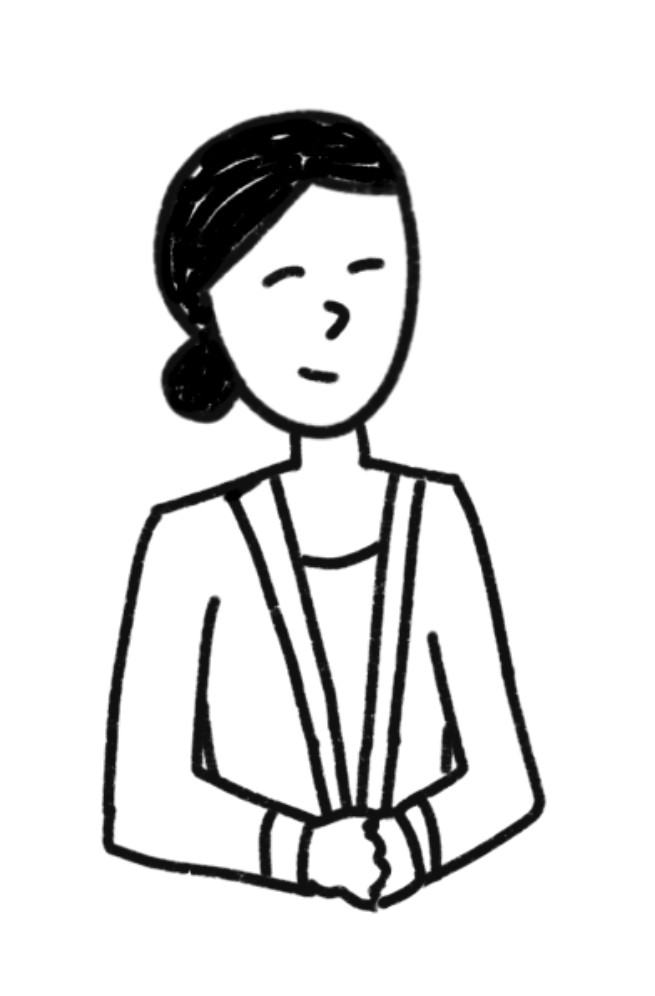
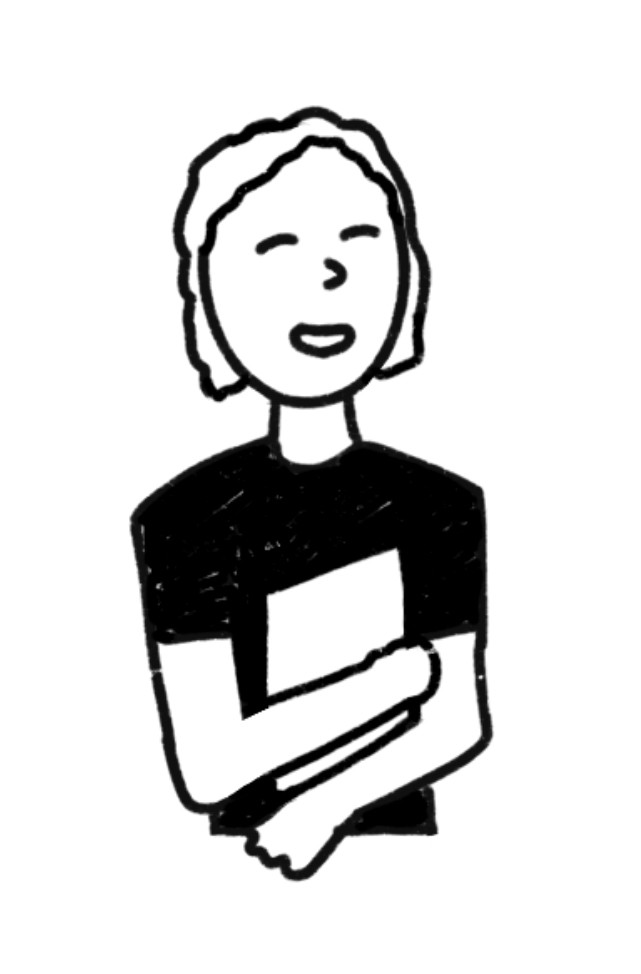
The clients informed us that litigants are the highest-priority users, followed by allied organizations that support cases, and then members of the public. Recognizing our limited knowledge of the legal space and its operations, I created 3 distinct user personas to guide my team.

User Interviews
Affinity & User Journey Mapping
We synthesized insights from the CSCT navigation portion of user interviews to identify key patterns.


THE PROBLEM
From our mapping, key pain points quickly emerged:
1.
2.
3.
4.
5.
OUR FOCUS
Empower litigants, allied organizations, and the public through accessible resources, personalized support measures, and clear calls to action.
FEATURE IDEATION
Seeking Inspiration from Similar Sites
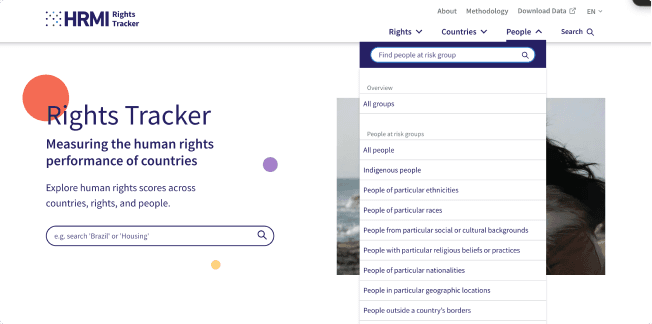
As a team, we gathered key takeaways from 5 sites that track and bring attention to human rights issues to identify potential opportunities for improving the CSCT.


FEATURE IDEATION
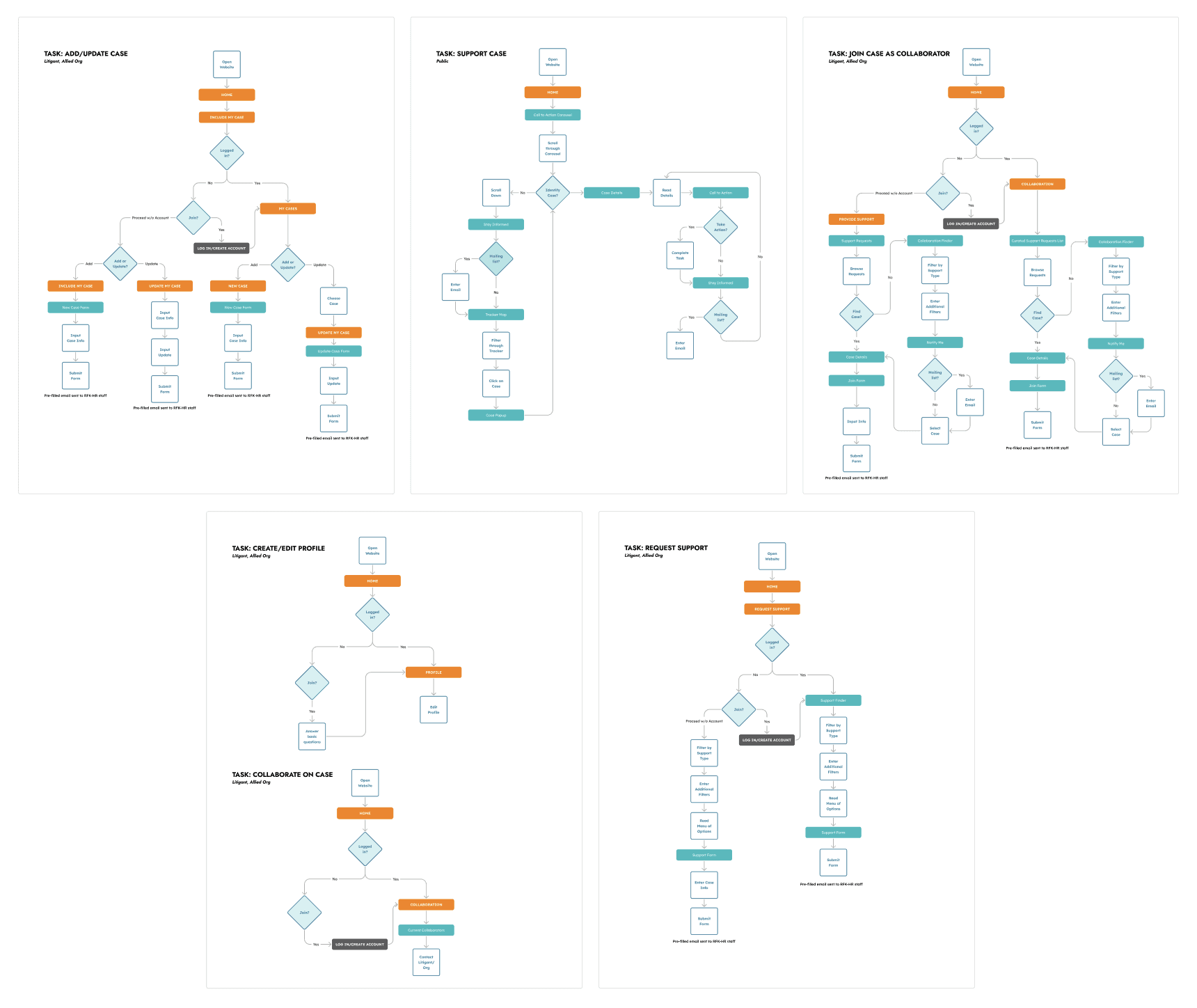
Brainstorming, then Refining Features

PULLING IT TOGETHER
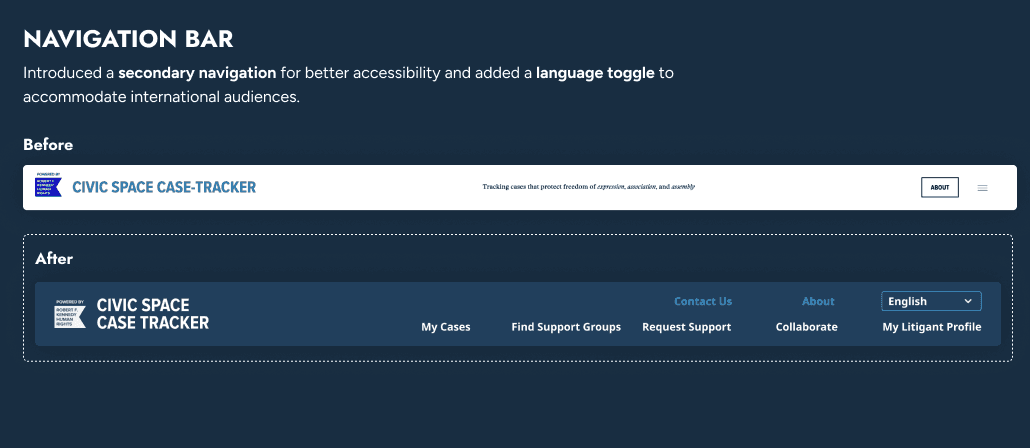
Our Final Product


Impact & Outcomes
Usability Testing Results
Stakeholder Feedback
Team Feedback

Reflection
1.
2.
3.